
How to Know If You Need a Fast Charging Cable

Updated: May 18
This guide helps you understand whether you really need a fast charging cable.
A fast charging cable is useful when you often charge phones, tablets, laptops, or other higher-power devices in daily use. It is not only about charging speed, but also about device compatibility, cable quality, connector type, and charging safety.
If you only charge one phone occasionally, a standard cable may already be enough. If you charge laptops, tablets, power banks, or multiple devices every day, EnergyFort may be a better direction to consider.
Fast charging technology for mobile phones is not just about "fast charging"; it involves multiple aspects such as current, voltage, chips, and safety protection. Next, we will unveil its mysteries step by step.
The principle of fast charging for mobile phones: a clever balance between voltage and current.
The core of fast charging is actually quite simple: transfer more electrical energy per unit of time . This is usually achieved by increasing the voltage or current. Traditional chargers typically output 5V, with a current of about 1A and a power of about 5 watts. Fast charging technology, on the other hand, increases the voltage to 9V, 12V, or even higher, or increases the current to 2A or 3A, easily achieving a power of 18W, 30W, or even higher.
Why increase the voltage or current? Because power (wattage) = voltage × current. The higher the power, the faster the charging speed.
However, this raises a question: can the phone's battery and circuitry withstand higher voltages and currents? The answer is no, they cannot be increased arbitrarily. The key to fast charging technology lies in how to intelligently adjust voltage and current to ensure both safety and efficiency.

Intelligent Protocols: The "Brain" of Fast Charging
Fast charging is not just about hardware upgrades, but more importantly, about the support for intelligent protocols . The phone and charger "communicate" through protocols to negotiate the most suitable voltage and current.
Common fast charging protocols include:
QC (Quick Charge) : Introduced by Qualcomm, it supports multiple voltage levels, up to 20V.
PD (Power Delivery) : USB-IF standard, which supports more flexible voltage and power adjustment.
VOOC, SuperCharge, etc .: These are proprietary technologies of major manufacturers, emphasizing high current and low voltage to reduce heat generation.
These protocols enable chargers and phones to communicate in real time, dynamically adjust output, and avoid overcharging, overheating, and battery damage.
For example, when the phone's battery is low, the fast charging protocol allows for higher voltage and current to quickly replenish the battery; when the battery is close to full charge, the protocol automatically reduces the charging power to protect battery life.
The working relationship between the charger and the phone's internal components
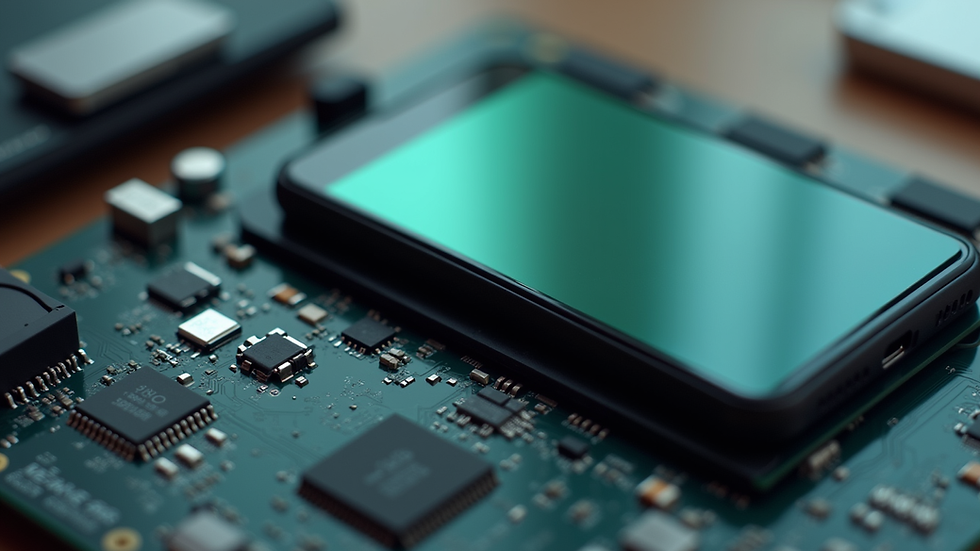
Fast charging isn't just about the charger; the phone's internal design is equally crucial. The phone's built-in charging management chip receives signals from the charger, regulates current and voltage, and protects the battery.
This includes:
Battery Management System (BMS) : Monitors battery temperature, voltage, and current to prevent overcharging and overheating.
Buck converter : Converts high voltage to a voltage suitable for the battery, ensuring safety.
Temperature sensor : Monitors temperature in real time to prevent safety hazards caused by overheating.
The combination of these hardware and software features makes fast charging not only fast, but also safe and stable.
Balancing charging speed and battery life
Many people worry that fast charging might damage battery life. This is a concern.
In fact, fast charging technology is designed with the battery's capacity in mind. Through intelligent protocols and battery management systems, fast charging adjusts the charging speed within the limits allowed by the battery's condition.
Fast charging phase : When the battery level is low, the charging speed is fast.
Trickle charging phase : When the battery is close to full charge, the charging speed slows down to protect the battery.
In addition, the chemical properties and manufacturing processes of modern lithium batteries are constantly improving, enabling them to better adapt to the pressure brought by fast charging.
Therefore, using fast charging properly will not significantly shorten battery life; on the contrary, it can improve the user experience.
How to choose and use fast charging devices?
Now that you understand the principles of fast charging for mobile phones, how do you choose the right fast charging device? Here are a few suggestions:
Choose a charger that supports the phone's fast charging protocol.
Different mobile phones support different fast charging protocols, so choosing a compatible charger will maximize the charging effect.
Use original or certified charging cables.
The quality of the charging cable directly affects charging efficiency and safety; it is recommended to use original or certified products.
Avoid using your phone under high load while charging.
Playing games or watching videos while charging can increase heat generation, affecting fast charging performance and battery health.
Pay attention to the ambient temperature during charging.
Both excessively high and low temperatures can affect charging efficiency and safety; try to charge at room temperature.
Regularly inspect charging equipment
Aging chargers and cables may cause unstable charging; timely replacement ensures safety.
With these simple measures, you can better enjoy the convenience of fast charging.
Future development trends of fast charging technology
Fast charging technology continues to advance. In the future, we can expect:
Higher power fast charging , such as 100 watts or even higher, can fully charge a phone in just a few minutes.
The widespread adoption of wireless fast charging technology has freed people from the constraints of cables.
Intelligent charging management automatically optimizes charging strategies based on user habits and battery status.
Safer and more environmentally friendly battery materials improve battery life and charging efficiency.
As a digital accessories brand, we are also paying attention to these trends and are committed to bringing you lighter, more aesthetically pleasing and more efficient charging solutions.
If you want to learn more about the principles behind fast charging technology for mobile phones , you can click the link to get more professional knowledge.
Fast charging technology makes our lives more convenient. Understanding how it works not only helps us use our phones better but also makes us more informed when choosing charging devices. Hopefully, this article will unveil the mysteries of fast charging and provide practical charging tips.
Let's enjoy the wonderful life brought by technology together!
You may also explore:


